

Unlock Innovation: Your Startup’s Guide to Open Source CNC
Here at My Machines, we believe in empowering creators, innovators, and dreamers to turn their visions into tangible realities. For too long, the barrier to entry for precision manufacturing has been a significant hurdle for startups and independent makers. High costs, proprietary systems, and steep learning curves often sideline brilliant ideas before they even get off the drawing board. But what if there was another way? A path paved with collaboration, flexibility, and affordability? Welcome to the exciting world of Open Source CNC.
CNC (Computer Numerical Control) machining is the backbone of modern manufacturing, enabling incredible precision and repeatability across a vast array of materials. Traditionally, this domain was exclusive, requiring substantial investment in both hardware and software. Open Source CNC is changing that narrative, democratizing access to powerful tools and fostering a vibrant community of innovation.
What Exactly is Open Source CNC?
At its core, Open Source CNC applies the open-source philosophy – transparency, collaboration, and free distribution – to the entire CNC ecosystem. This isn’t just about using free software; it’s a holistic approach that often encompasses:
- Open Source Software: This includes CAD (Computer-Aided Design), CAM (Computer-Aided Manufacturing), and the actual control software that runs the CNC machine. Unlike costly industrial licenses for software like SolidWorks or Mastercam, open-source alternatives are freely available, modifiable, and continuously improved by a global community.
- Open Source Hardware Designs: Many CNC machine designs themselves are open source. This means their schematics, bill of materials, and assembly instructions are publicly available. You can build your own machine from scratch, modify existing designs, and truly understand how every component functions, rather than being limited by proprietary black boxes.
Navigating the Open Source CNC Ecosystem: Software & Hardware
Let’s dive into the practical tools and concepts that make Open Source CNC a game-changer.
Software: From Concept to G-code
- CAD (Computer-Aided Design):
To design your parts, industrial standards like SolidWorks or AutoCAD come with hefty price tags and annual subscriptions. For startups and makers, this can be a prohibitive expense.
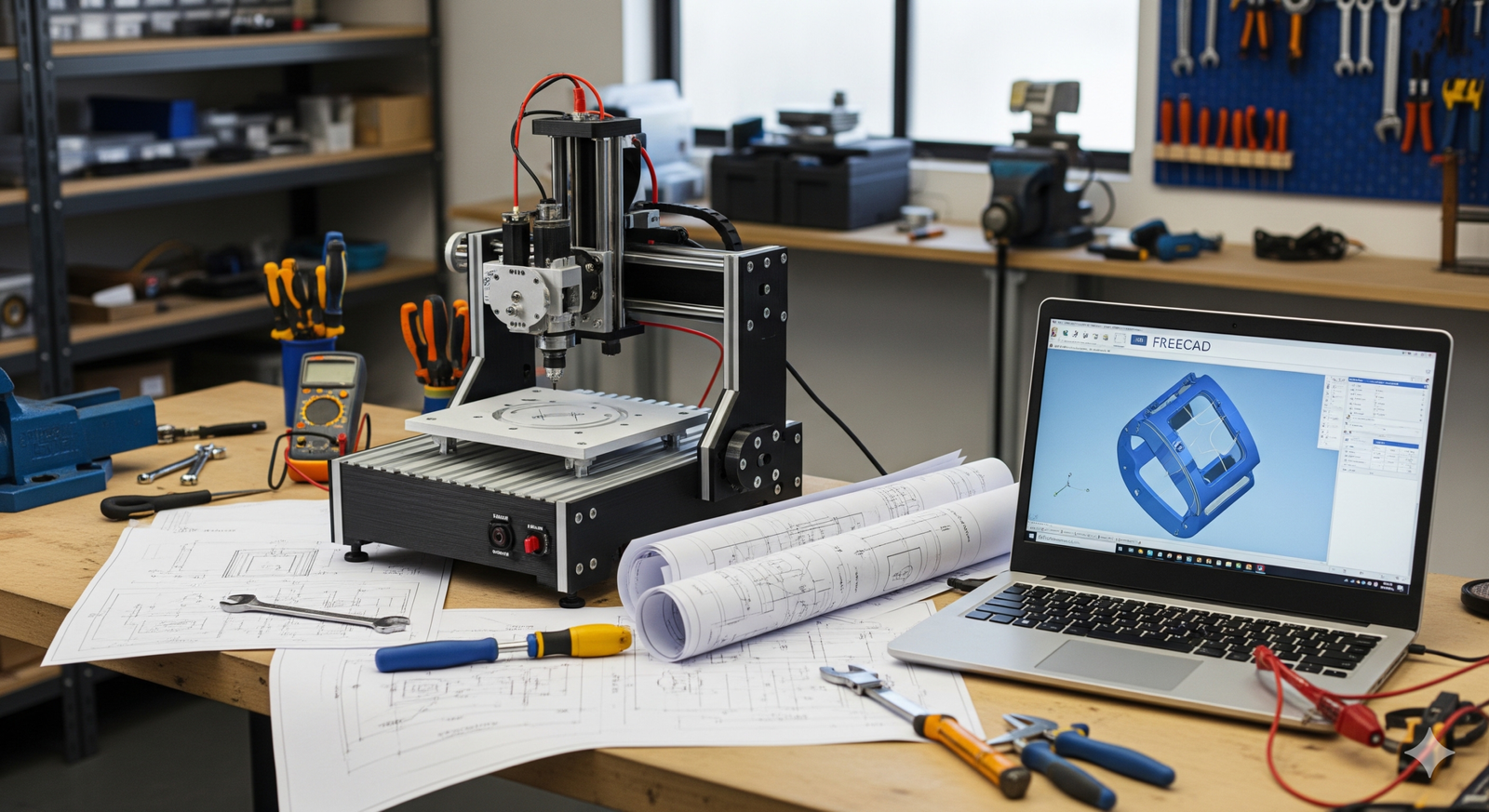
The open-source world offers powerful, free alternatives. FreeCAD is an excellent parametric 3D modeler that rivals many commercial packages for mechanical design. For more artistic or organic shapes, Blender, while known for 3D animation, also boasts robust modeling capabilities that can be used for CNC design. These tools provide the freedom to design without financial constraints. - CAM (Computer-Aided Manufacturing):
Once your design is ready, CAM software translates it into G-code – the language your CNC machine understands. Proprietary solutions like Mastercam or CAMWorks are powerful but carry significant license costs.
In the open-source realm, FreeCAD’s Path Workbench offers integrated CAM capabilities, allowing you to generate toolpaths directly from your designs. Other options like Kiri:Moto and various G-code generators found online provide accessible ways to turn your CAD models into machine instructions. - CNC Control Software:
This is the brain that interprets G-code and controls your machine’s movements. High-end industrial machines use proprietary, often closed-source, controllers.
For open-source setups, GRBL is a widely adopted, high-performance firmware for Arduino-based microcontrollers, perfect for smaller machines. For more complex, multi-axis control, LinuxCNC (formerly EMC2) offers professional-grade, real-time control running on a Linux operating system, often found driving impressive custom-built machines. Simple G-code senders like Universal G-code Sender (UGS) provide user-friendly interfaces to interact with GRBL-controlled machines.
Hardware: Build Your Dream Machine
The open-source ethos extends to the physical machines themselves. Projects like the Mostly Printed CNC (MPCNC), LowRider CNC, or various modified 3D printer conversions provide blueprints to build capable machines using readily available, often inexpensive, components. This DIY approach not only saves money but also fosters a deep understanding of your machine’s mechanics and electronics, empowering you to troubleshoot and customize it precisely to your needs.
The Undeniable Benefits for Startups and Makers
Why should your startup or maker project embrace Open Source CNC?
- Significant Cost Reduction: This is arguably the biggest immediate benefit. By eliminating expensive software licenses (comparing SolidWorks to FreeCAD) and allowing for more affordable, DIY hardware builds, Open Source CNC dramatically lowers your initial capital expenditure. This frees up crucial funds for R&D, marketing, or other operational needs.
- Unparalleled Freedom & Customization: No vendor lock-in! You have the complete freedom to modify, adapt, and integrate every aspect of your CNC setup. Need a custom post-processor for a unique tool? Want to add a specific sensor or automated feature? The open-source nature means you can implement these changes without permission or exorbitant fees.
- Vibrant Community Support: You’re never alone. The open-source community is a global network of passionate individuals and experts. Stuck on a problem? Need advice on optimizing a toolpath? Forums, wikis, and Discord channels dedicated to specific open-source projects provide invaluable support, shared knowledge, and continuous improvement.
- Accelerated Learning & Skill Development: Working with open-source tools forces you to understand the underlying principles. This hands-on experience translates into a deeper skill set for your team, making them more adaptable, resourceful, and capable of innovating independently.
- Rapid Prototyping & Iteration: The ability to design, generate toolpaths, and machine parts on your own terms, without external dependencies or per-job costs, enables incredibly fast prototyping cycles. Test an idea on Monday, refine it on Tuesday, and have a new prototype by Wednesday – accelerating your product development lifecycle.
- Transparency & Control: With open-source, you know what’s under the hood. There are no hidden algorithms or proprietary secrets. This transparency builds trust and gives you ultimate control over your manufacturing process, which is invaluable for quality control and process optimization.
Forge Your Future with Open Source CNC
The open-source movement has revolutionized software development, and it’s doing the same for manufacturing. For startups and makers, Open Source CNC isn’t just an alternative; it’s a strategic advantage. It empowers you to innovate faster, build smarter, and create with unprecedented freedom and affordability.
Are you ready to transcend the traditional limitations and embrace a more collaborative, flexible, and powerful way to bring your creations to life?
We at My Machines are excited to see what you’ll build. Share your thoughts, experiences, or questions about Open Source CNC in the comments below! Let’s build the future together.